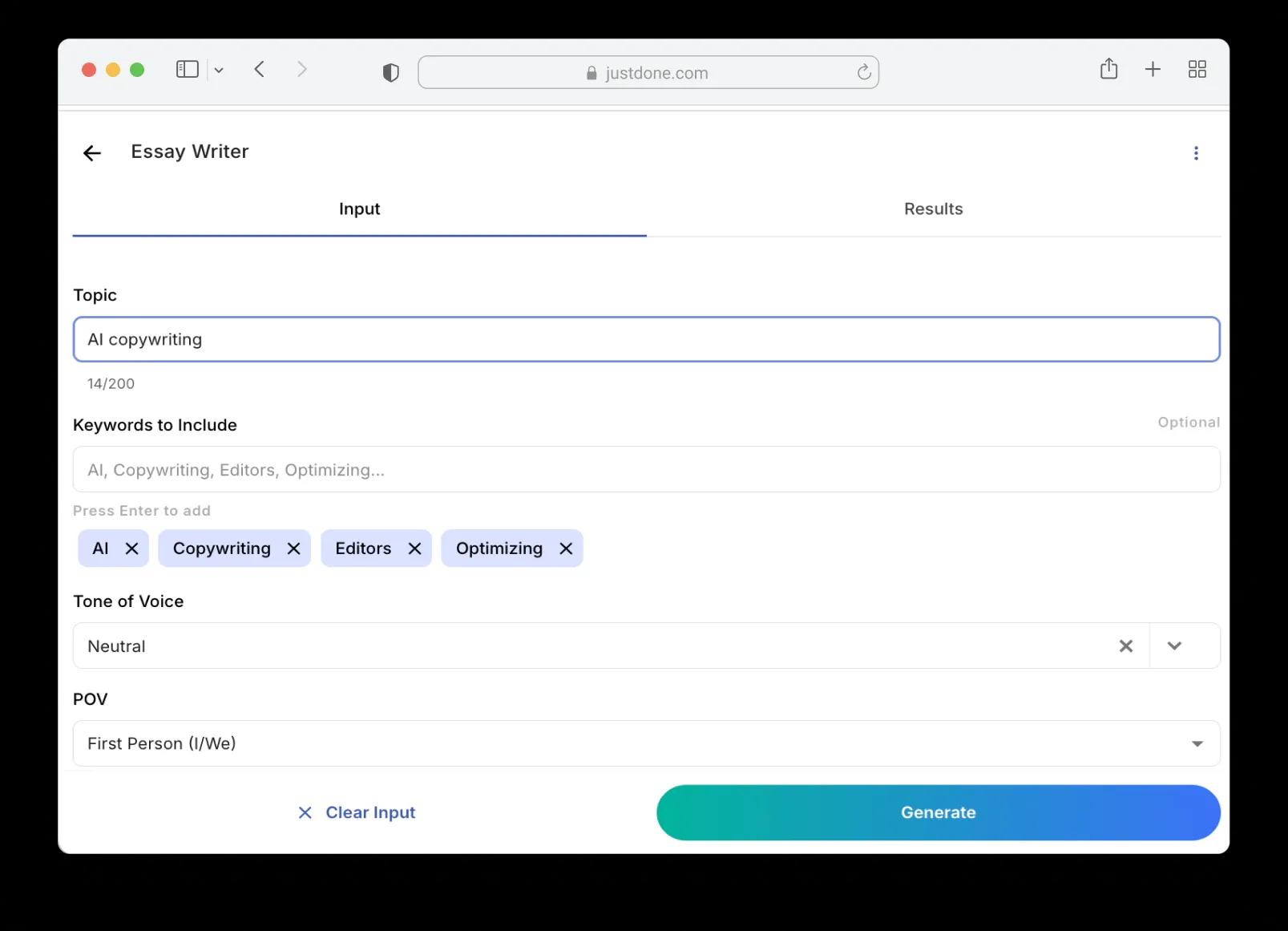
Topic-Driven Generation, Not Random Content
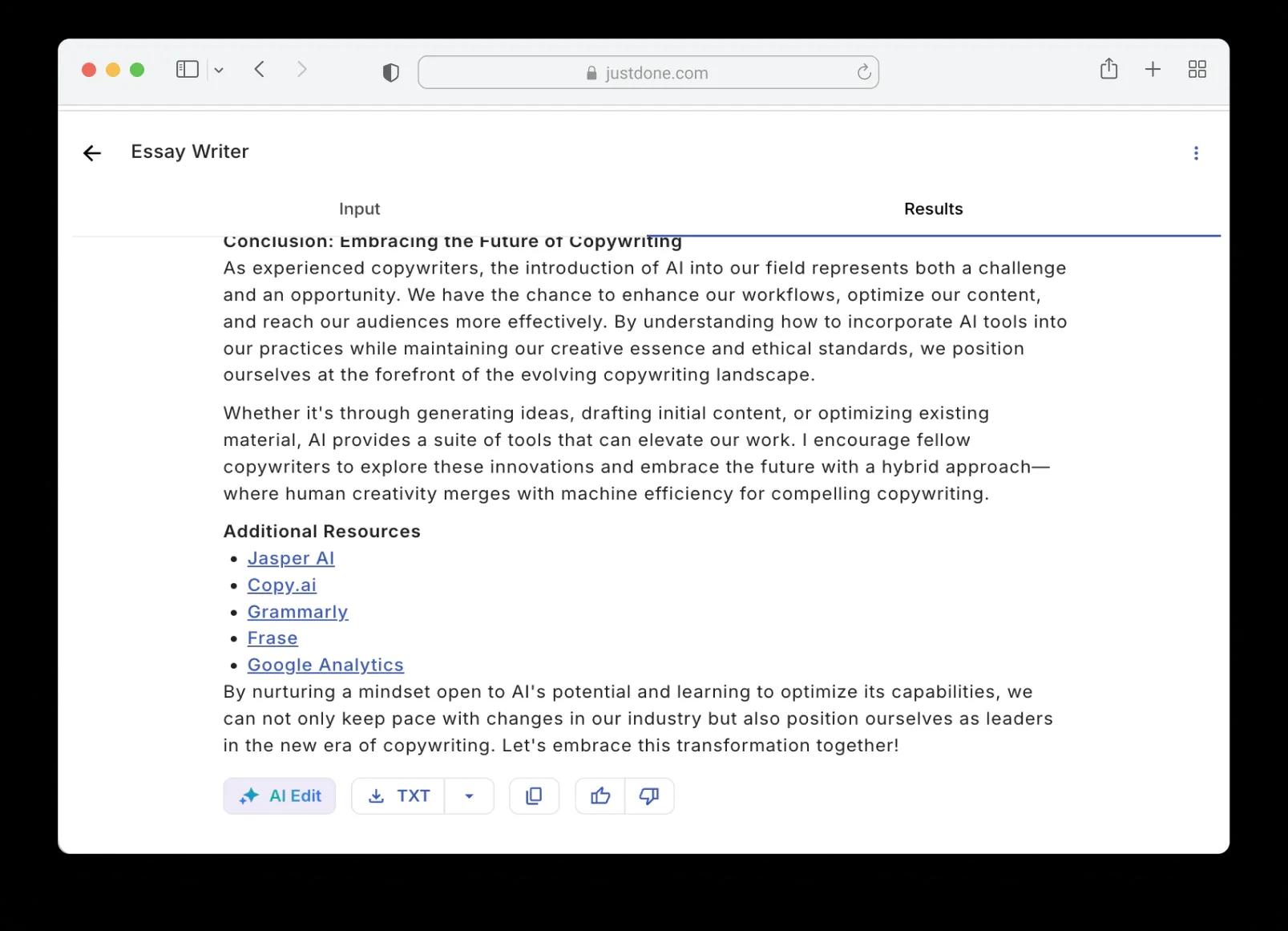
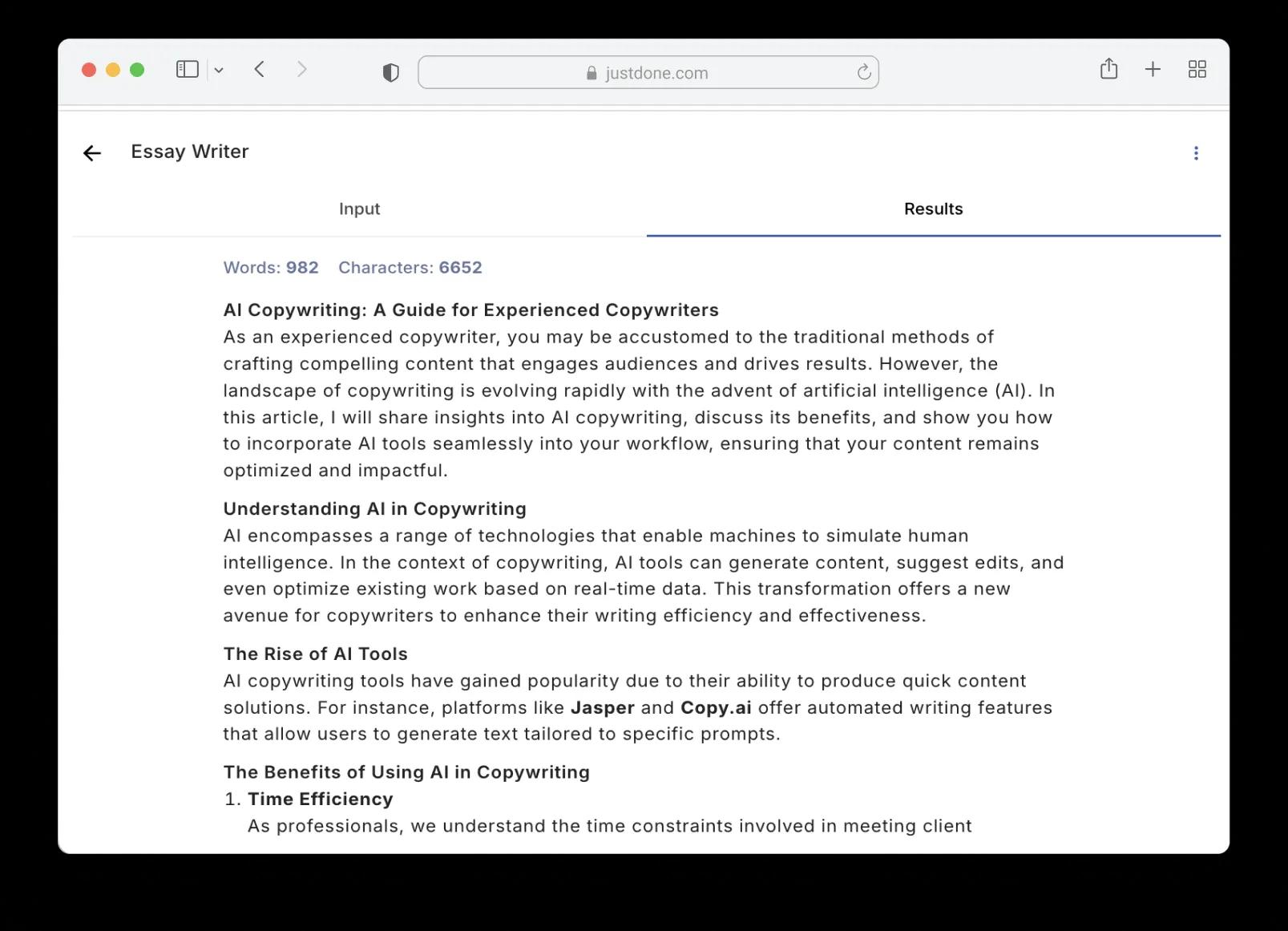
You start with a topic — anything from "AI copywriting" to "the ethics of genetic editing" — and the AI builds an essay around it. Not a loose collection of sentences, but a structured piece with section headings, a clear thesis, supporting arguments, and a conclusion that ties everything together. The output reads like a first draft written by someone who actually understands the subject.
Keyword Control
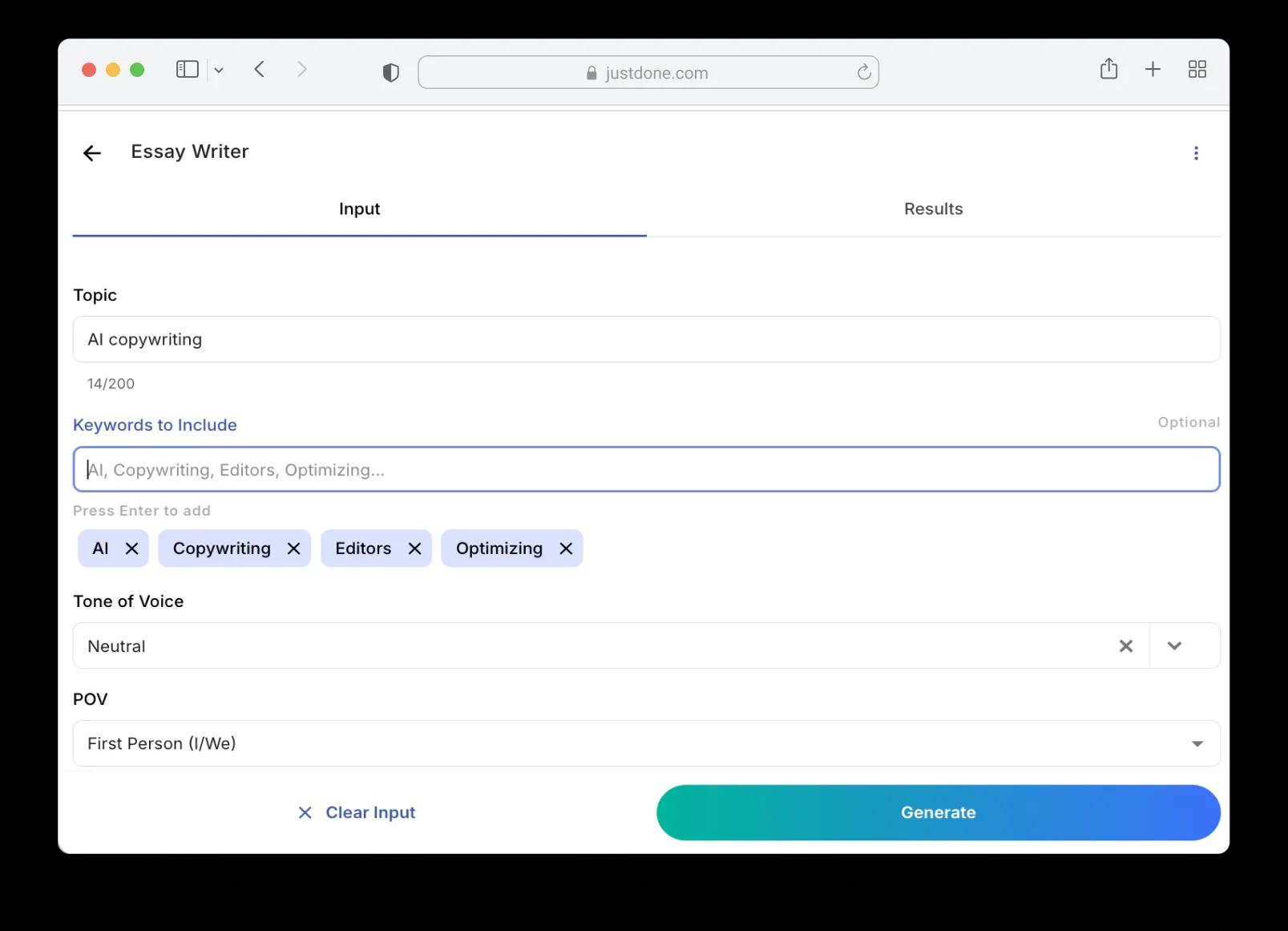
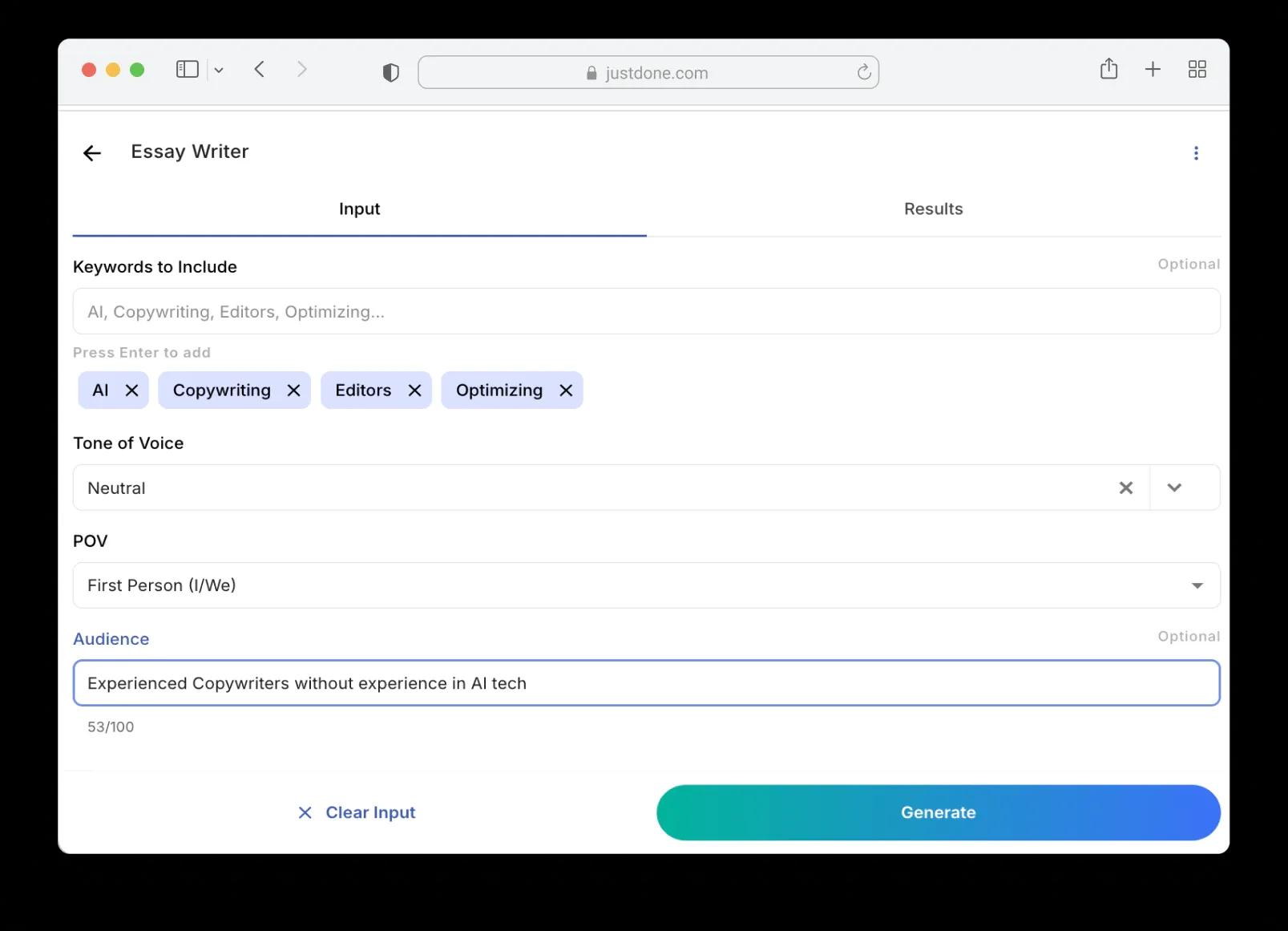
Add specific keywords you want the essay to cover. If you're writing about climate policy and need the essay to address "carbon pricing," "renewable subsidies," and "emissions targets," add them as keywords. The AI weaves them into the essay naturally — not as forced insertions, but as integral parts of the argument.
Tone Options
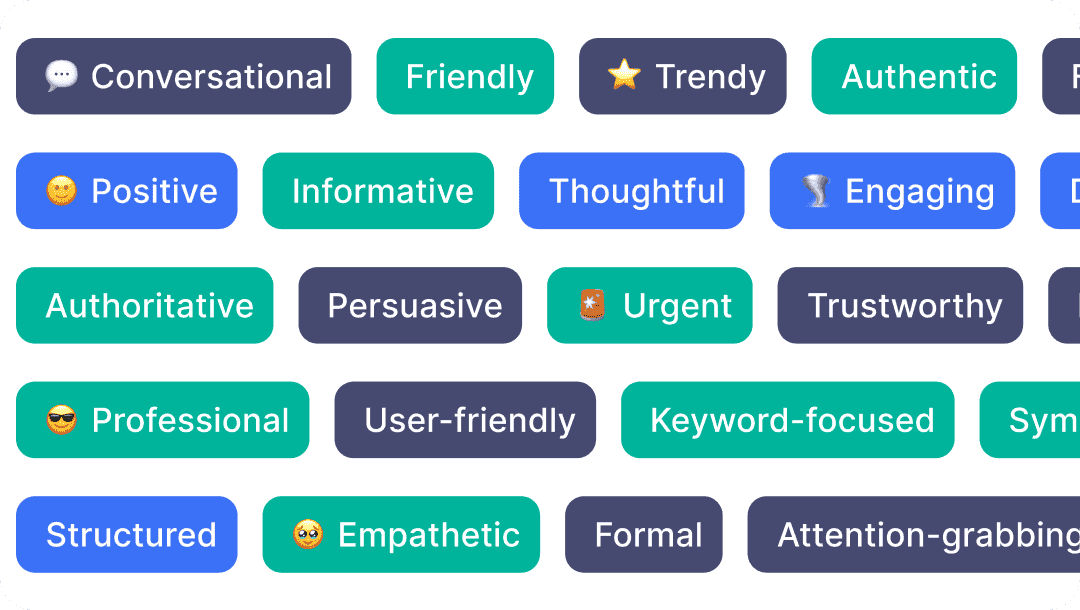
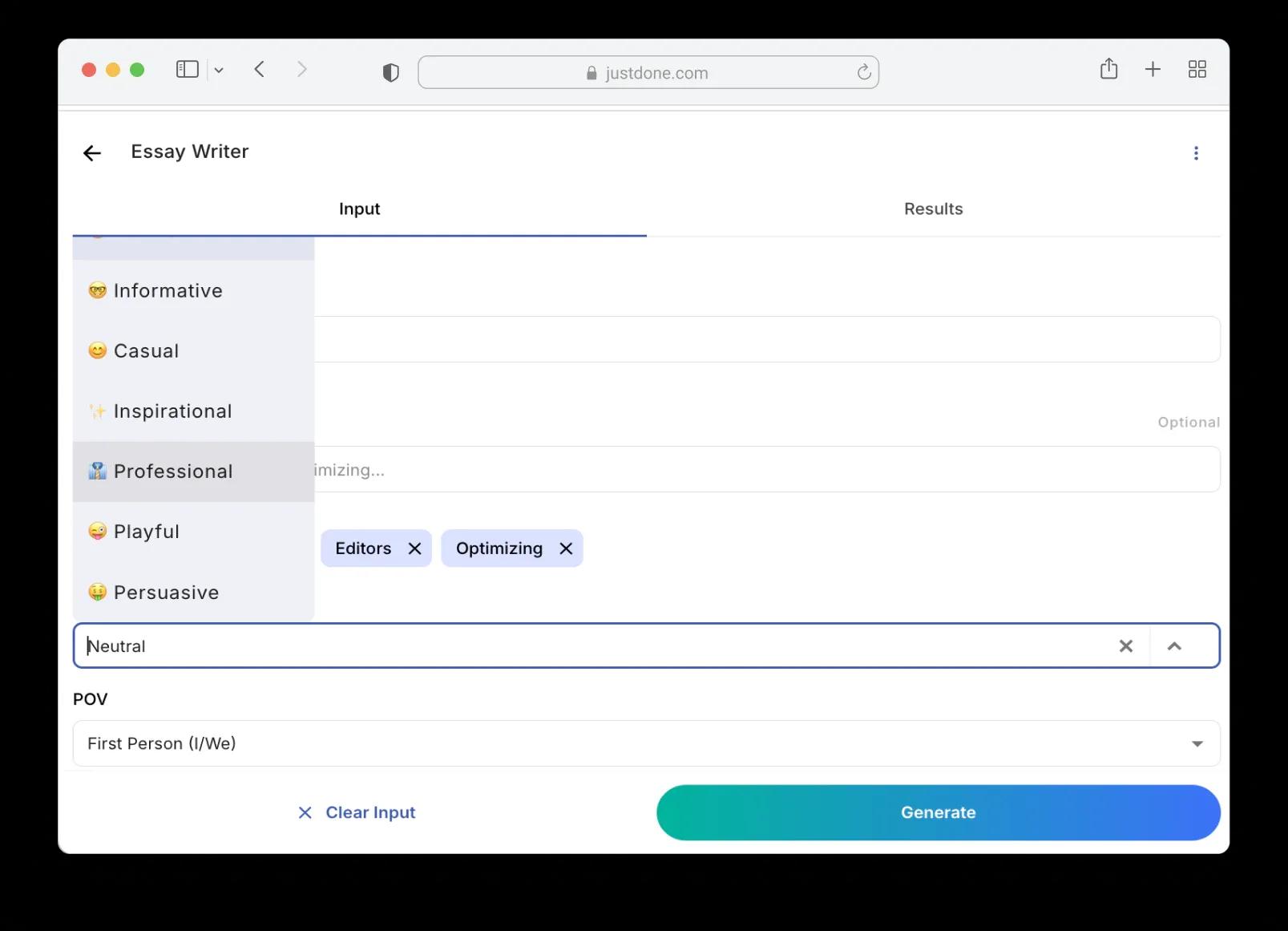
Neutral, Informative, Casual, Inspirational, Professional, Playful, Persuasive — pick the right tone before generating. An academic essay needs a different voice than a blog-style opinion piece or a persuasive argument. Setting the tone upfront means less rewriting after.
First or Third Person
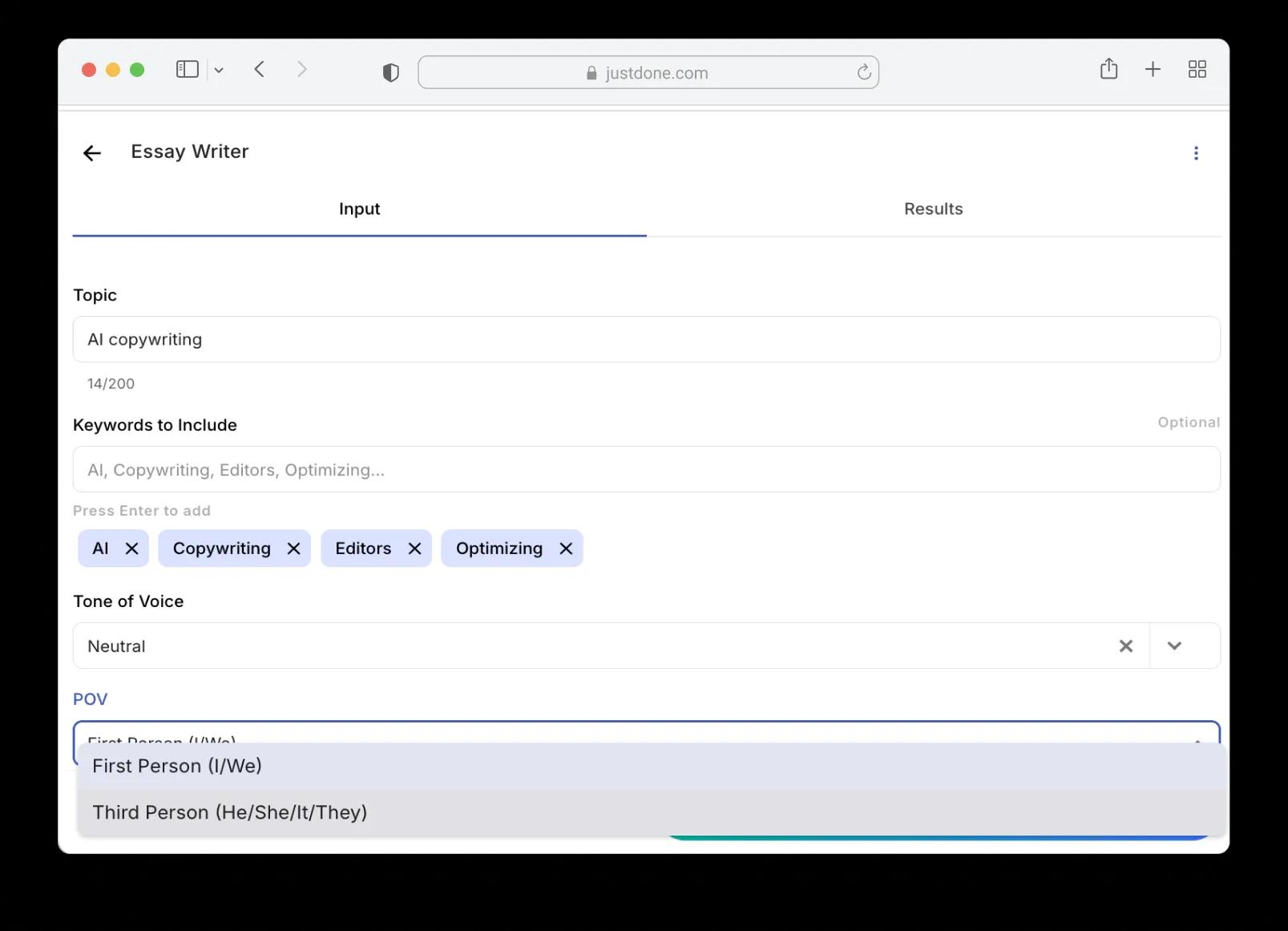
Choose your point of view before the essay is generated. First Person (I/We) works for personal essays, reflections, and opinion pieces. Third Person (He/She/It/They) fits academic writing, research summaries, and formal analysis. The AI maintains consistent POV throughout the entire piece.
Audience Targeting
Tell the AI who the essay is for. "High school students studying history." "Marketing professionals new to AI." "Academic reviewers in neuroscience." The audience setting shapes vocabulary, complexity, and the level of assumed knowledge — so the essay lands with the right readers without extra editing.
Export and Edit
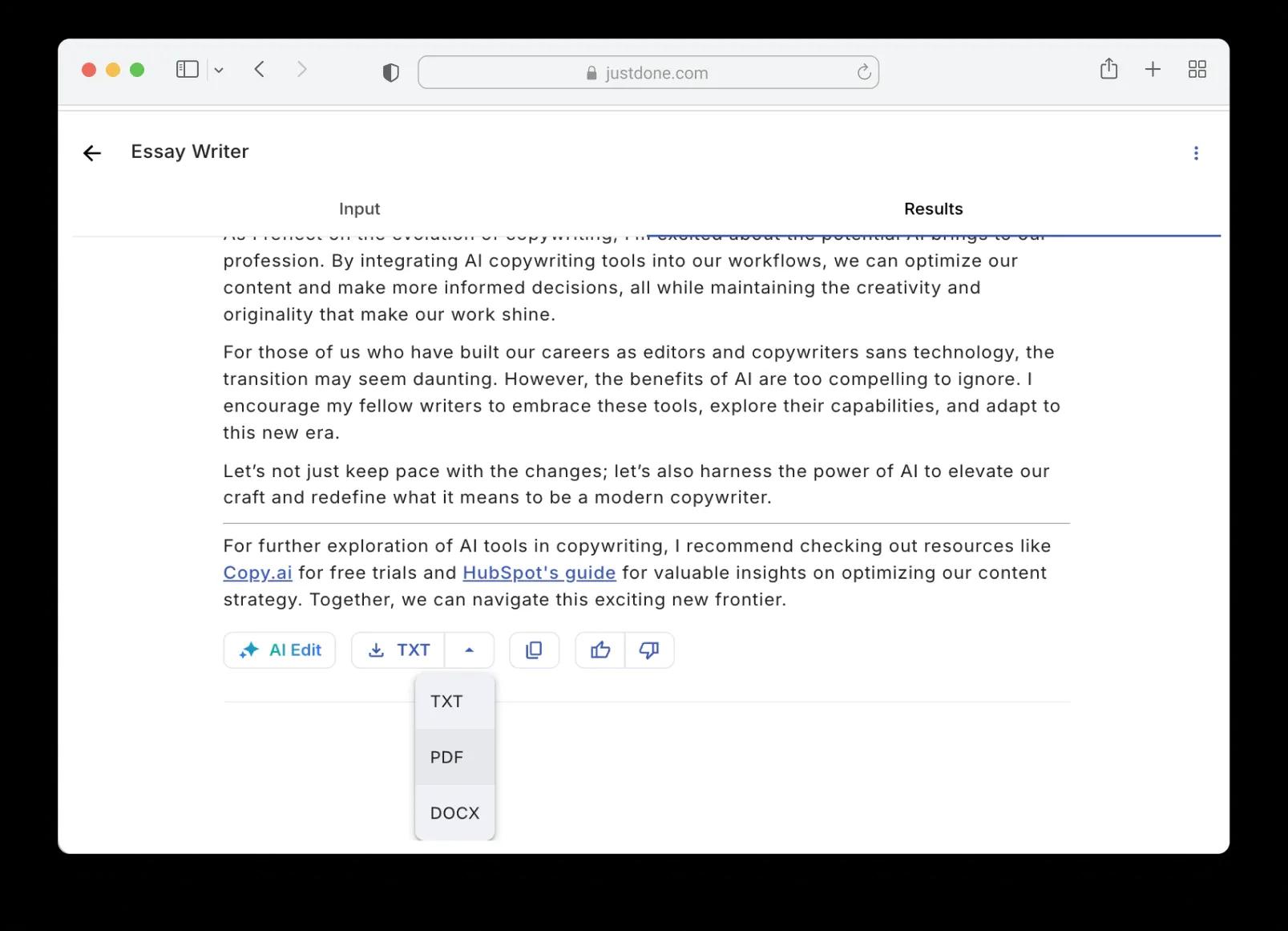
Once your essay is generated, download it as TXT, PDF, or DOCX — or use AI Edit to refine specific sections directly in the tool. Copy to clipboard with one click if you need to paste it elsewhere. Every essay shows word and character counts, so you know immediately whether it hits your target length.