Key takeaways:
- Add depth, not filler. Ethical word count growth means every new sentence must explain, support, or challenge your idea, not just sound academic.
- Expand what you already have before adding new sections. One extra research detail, one realistic example, or one cause-and-effect chain can add strong, relevant words without making your essay repetitive.
- Track your progress and stop at the target. Use JustDone Word Counter to see exactly how many words you still need.
Finishing an essay and realizing you are still hundreds of words short is a specific kind of frustration. You feel like you already answered the question, but the word count says otherwise. The temptation is to start stretching sentences, repeating yourself, or adding vague lines that sound academic but do not actually add meaning.
However, when you increase the length ethically, you are not padding. You are adding depth. You are showing more reasoning, more evidence, and more clarity. Done well, your essay gets longer and your grade usually improves too. Below are seven practical ways to increase word count ethically, without sounding repetitive.

What Ethical Word Count Expansion Actually Means
Ethical expansion is simple: every added sentence should either explain, support, or challenge an idea already in your essay. If a sentence does not do one of those things, it is probably filler.
There is a difference between writing more and saying more. The goal is to say more.
1. Do one more round of research and add a new supporting detail
If you are significantly under the word count, the fastest honest fix is usually research. Not ten new sources. Just one strong source, statistic, expert quote, or case study that directly supports a paragraph you already have.
This works because research gives you new material that naturally creates new sentences. You can introduce the evidence, explain it, and connect it back to your argument. That is depth, not padding.
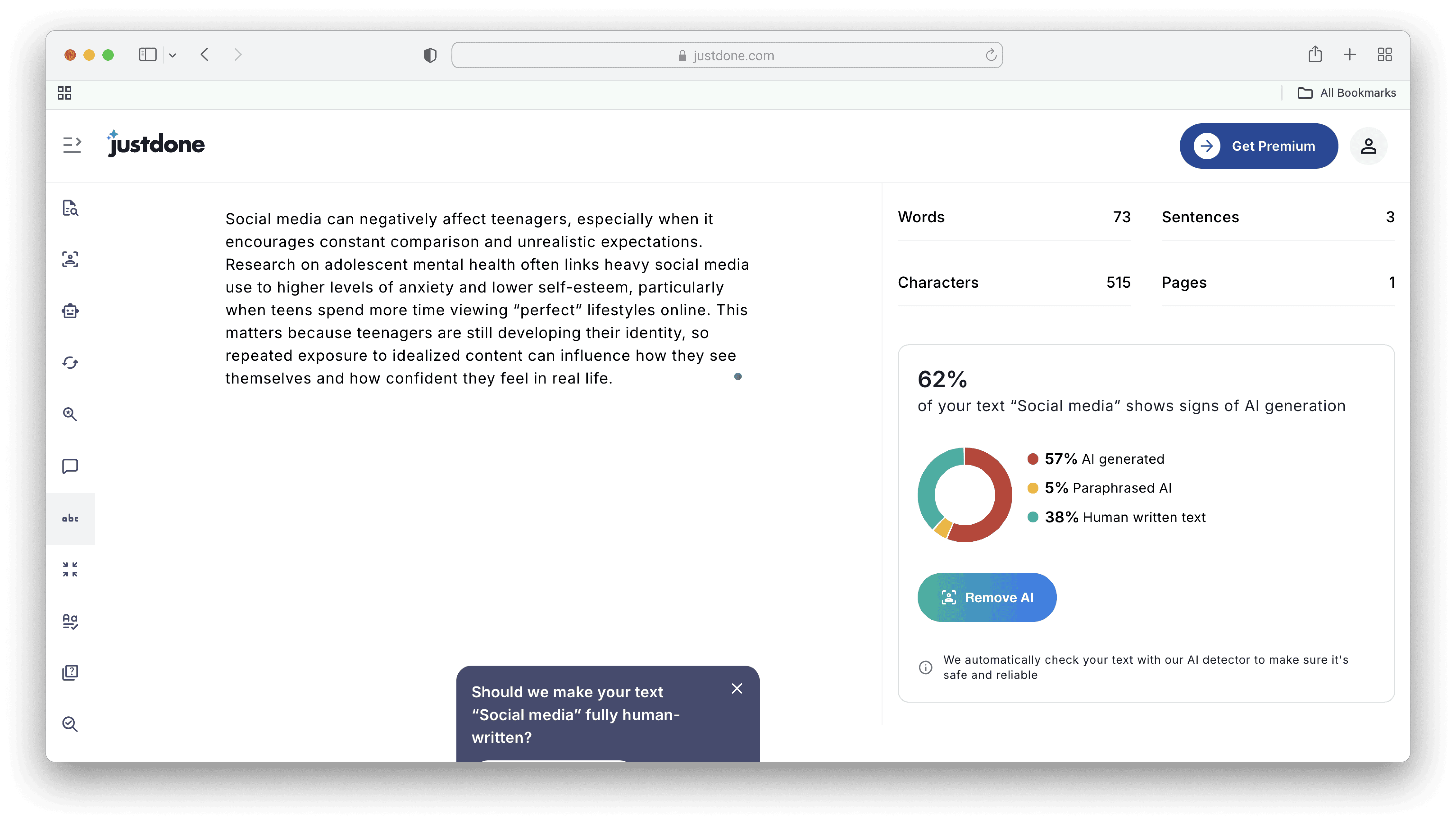
For instance, let’s compare two paragraphs. The first sounds like “Social media can negatively affect teenagers.” I added one research detail and connection, getting the final output like this:
“Social media can negatively affect teenagers, especially when it encourages constant comparison and unrealistic expectations. Research on adolescent mental health often links heavy social media use to higher levels of anxiety and lower self-esteem, particularly when teens spend more time viewing “perfect” lifestyles online. This matters because teenagers are still developing their identity, so repeated exposure to idealized content can influence how they see themselves and how confident they feel in real life.”
Word Counter tool shows the result accurately as you write, so you will have concrete numbers of words, characters, sentences, and pages that you have:
A good rule is to attach the new source to an existing point instead of creating a random new section at the end. Your essay stays focused, but it grows.
2. Expand key points with one extra layer of explanation
Most short essays are not missing ideas. They are missing explanation. Students often state a claim and move on too quickly.
Pick one sentence in each body paragraph that contains a major claim. Then add one to three sentences that answer questions like:
- Why does this matter
- How does this happen
- What does this lead to
- Who is affected and in what way
You are not repeating yourself. You are finishing the thought. Let’s see how these recommendations work on the example. Here’s a typical Intro of a student’s essay (73 words):
“Online learning is not always as effective as in-person learning. Students can attend classes from home, which sounds convenient, but it also makes it easier to get distracted. Many students struggle to stay focused when they are not in a classroom environment. Online learning can also feel less interactive, so students might not ask questions or participate as much. Because of this, students may not learn as well as they would in person.”
After I expanded it with one extra layer of explanation, it can look like this:
“Online learning is not always as effective as in-person learning. Students can attend classes from home, which sounds convenient, but it also makes it easier to get distracted. Many students struggle to stay focused when they are not in a classroom environment, especially when their bedroom or living room is also the place where they relax. Online learning can also feel less interactive, so students might not ask questions or participate as much. This happens because it is easier to stay silent behind a camera, and some students feel uncomfortable speaking in online discussions. Because of this, students may not learn as well as they would in person, even if they technically attend every lesson. Over time, missing small explanations or avoiding participation can lead to gaps in understanding that become obvious during exams or major assignments.”
137 words vs 73, which is a great result.
3. Define important terms in your own words
Definitions are an ethical way to add words because they clarify meaning and show understanding. This is especially useful if your topic includes concepts that can be interpreted in different ways.
The key is to define terms naturally, not like a dictionary. A definition written in your own words reads more human and helps the reader follow your argument.
If you are writing about academic integrity, for example, you can explain what it means in practice, not just as a formal concept. That adds length and improves clarity.
4. Add a concrete example that makes the point feel real
Examples are one of the cleanest ways to see your word count rise without harming quality. A good example illustrates your argument and makes your paragraph easier to understand.
You can use a real-world scenario, a brief case, a historical event, or even a small personal observation if your assignment allows it. Keep it relevant. One strong example is better than three weak ones.
When you add an example, do not stop at the example. Add one or two sentences explaining how the example proves your point. That is where the real academic value is.
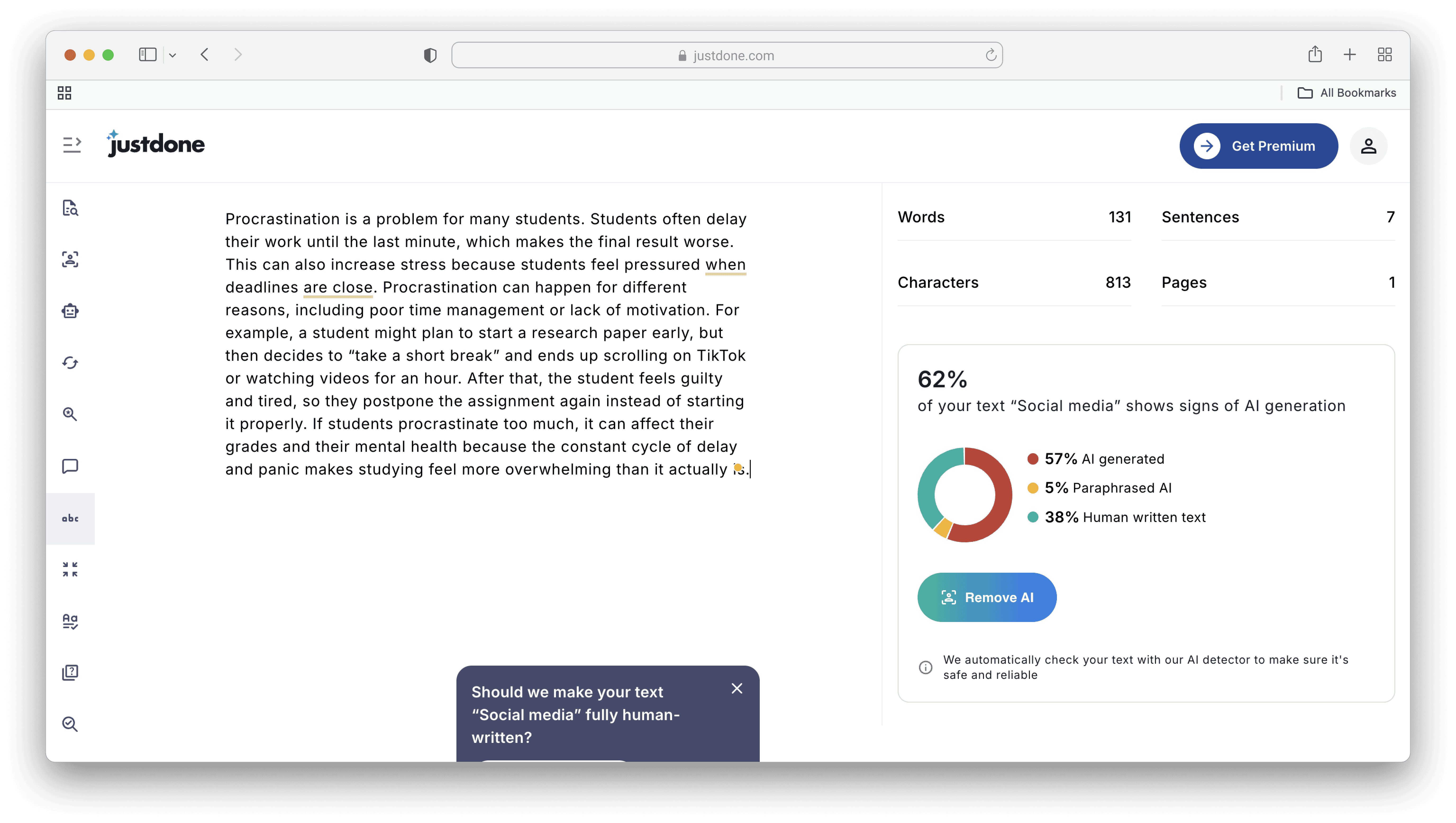
For instance, the paragraph “Procrastination is a problem for many students. Students often delay their work until the last minute, which makes the final result worse. This can also increase stress because students feel pressured when deadlines are close. Procrastination can happen for different reasons, including poor time management or lack of motivation” can be expanded with a realistic example like this:
“Procrastination is a problem for many students. Students often delay their work until the last minute, which makes the final result worse. This can also increase stress because students feel pressured when deadlines are close. Procrastination can happen for different reasons, including poor time management or lack of motivation. For example, a student might plan to start a research paper early, but then decides to “take a short break” and ends up scrolling on TikTok or watching videos for an hour. After that, the student feels guilty and tired, so they postpone the assignment again instead of starting it properly. If students procrastinate too much, it can affect their grades and their mental health because the constant cycle of delay and panic makes studying feel more overwhelming than it actually is.”
With this step, you can easily add 75 or more words. Check the result in word count checker to feel confident.
5. Build a cause and effect chain
If your paragraph feels thin, cause and effect is a reliable expansion tool. Most topics can be developed by exploring what causes the issue and what consequences follow.
For example, instead of saying that students procrastinate, you can explain what triggers procrastination and what outcomes it creates. This approach adds reasoning, not filler, because it shows a logical chain rather than a single statement.
6. Add a counterargument and a rebuttal
This is one of the most ethical ways to expand an essay, because it proves you are thinking critically. You show that you understand an opposing view, then you explain why your argument still stands.
A simple structure is enough:
- Some people argue this
- That argument makes sense because
- However, this is limited because
- A more accurate conclusion is
This kind of section can add 150 to 300 words quickly, and it usually strengthens your essay more than any other strategy.
7. Improve your evidence use by adding analysis, not more quotes
A common mistake is adding more quotations to increase word count. Quotes only help if you explain them. Instead of adding new sources, look at the quotes you already included. Ask yourself if you fully analyzed them. In many student essays, a quote appears and the paragraph moves on. That is a missed opportunity.
Add a few sentences that explain what the quote means, why it is credible, and how it supports your thesis. If relevant, point out a limitation or a different interpretation. That increases length in a way teachers value because it is analysis.
A Simple Workflow to Reach Word Count With Ease
Start by checking your draft in the JustDone Word Counter and write down the exact number of words you need. If you need under 150 words, expand two paragraphs using explanation and transitions. If you need 150 to 400 words, add one example and one counterargument, and expand two key points. If you need 400 plus words, add one more research source, expand multiple paragraphs with cause and effect, and strengthen your thesis so the essay has more direction.
Then read the expanded sections out loud. If a sentence feels like it exists only to add words, cut it. Ethical expansion still needs editing.
The Right Way to Increase Word Count
Word count feels like a rule, but it is really feedback. If you are under the requirement, your essay probably needs more development. When you add depth through research, examples, definitions, reasoning, and counterarguments, you are not just making the paper longer. You are making it more convincing.
Use the JustDone Word Counter as you edit so you can see your progress and stop the moment you reach the target. The goal is not to write the longest essay possible. The goal is to write the most complete version of your argument at the required length.
